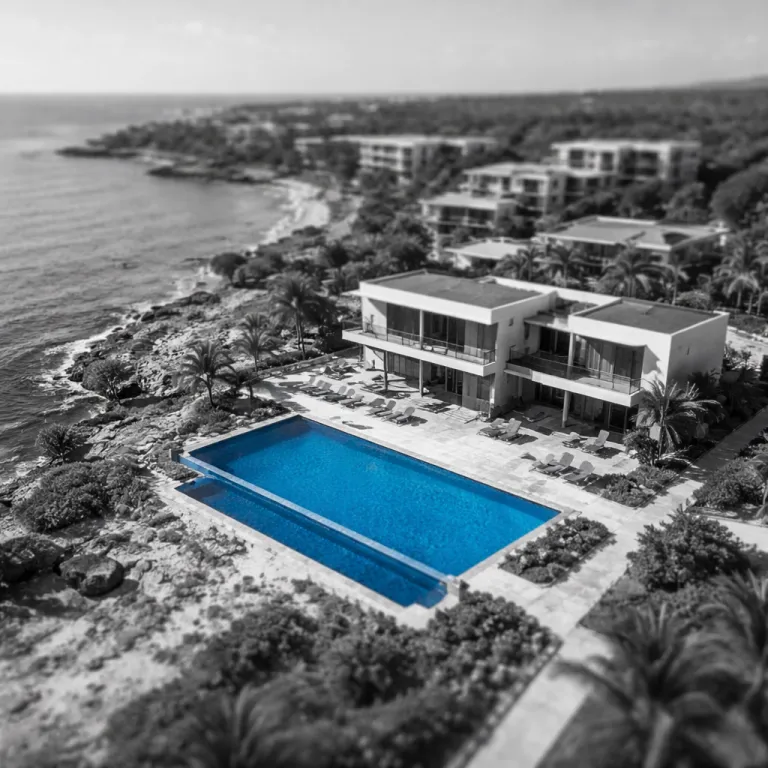
The architectural before and after of Dominican luxury
Stand on Bávaro Beach today and it is hard to remember how themed the average Dominican resort once felt. A decade ago the typical all-inclusive resort in the eastern Dominican Republic leaned on faux Mediterranean architecture, with pastel domes, plaster colonnades and a golf course or two pasted behind the swimming pool. That era is fading fast, replaced by a quieter Dominican luxury hotel architecture language that treats every property as a serious piece of coastal real estate rather than a stage set.
Back then, a Punta Cana hotel usually meant a dense strip of rooms, a loud main pool and a buffet that tried to be all things to all guests. The classic resort model was efficient for tour operators, but it rarely gave you a meaningful view of the beach or any sense of the surrounding country beyond the gate. Today, the new wave in Punta Cana and Cap Cana is defined by lower density, more deliberate master planning and a willingness to let the Caribbean light, the playa and the sea breeze do most of the talking.
Look at St. Regis Cap Cana, where architect Alejandro Acebal Canney has pulled the resort back from the shore to protect the dunes while still framing the ocean with long, low volumes. His team at Acebal Canney Arquitectos & Asociados uses local stone, timber and deep overhangs so the hotel feels rooted in the Dominican landscape rather than imported from the Red Sea or Costa Rica. This is contemporary Dominican luxury hotel architecture as a form of quiet confidence, not themed spectacle, and it is already influencing how future inclusive resort projects are being drawn.
The pipeline between now and the late decade in Punta Cana, Cap Cana and the broader Cana corridor is stacked with properties that reject the old Bávaro kitsch. W Punta Cana, Zemi Miches Curio Collection by Hilton and the Autograph Collection resort often referenced as Donoma are all leaning into a more sculptural approach, with courtyards, shaded walkways and a mix of swimming pool typologies from lagoon-style basins to infinity terraces. These hotels still offer the expected spa, golf and resort amenities, but the design now shapes how you move, where you pause and how you experience each view of the beach or the golf course.
On the north coast, Amanera quietly set the benchmark for this shift long before the investment circuit started talking about it. The resort sits above Playa Grande on a dramatic Atlantic cliff, with freestanding casitas that step down the slope instead of marching in a straight line like a typical resort block. Low density, indigenous timber and a careful relationship to the jungle edge make Amanera feel more like a refined coastal village than a conventional hotel, and that has become a reference point for architects across the Dominican Republic.
Industry reporting backs up what you can already feel on the ground, with a double-digit percentage increase in luxury tourism arrivals as travelers respond to this new architectural vocabulary. According to the Dominican Republic Ministry of Tourism’s annual tourism statistics and summaries in outlets such as Travel Curator and Mansion Global, high-end visitors are choosing properties where architects and interior design studios are finally being allowed to lead the conversation. As one senior official at the Ministry has put it in recent press briefings, “our most design-forward hotels are now the ones setting the pace for luxury demand.” When you book now, you are no longer choosing only between brands, but between fundamentally different ideas of what a Caribbean property should be.
The new Dominican vocabulary: architects, interiors and quiet luxury
The shift in Dominican luxury hotel architecture is being driven by a small but influential circle of architects and designers who treat each resort as a cultural statement. Alejandro Acebal Canney’s work at St. Regis Cap Cana shows how a Cana resort can be both ultra-luxury and deeply Dominican, with stone walls that echo rural fincas and timber pergolas that filter the sun over every pool deck. Inside, interior design is handled with the same restraint, avoiding clichés while still nodding to the republic’s craft traditions.
At St. Regis Cap Cana, interior designer Tatiana Sheveleva and her CHAPI Design group have built a narrative around light, texture and local references rather than obvious Caribbean tropes. Public spaces open to the view with wide sliding panels, while guest rooms frame the beach or the golf course with calm, almost residential proportions. This is where quiet luxury becomes tangible, in the way a spa wellness corridor is lit, or how a resort spa relaxation room uses local stone and timber to cool the air without shouting about sustainability.
Across Punta Cana and Cap Cana, you see similar moves from other architects who are shaping a new Dominican vocabulary. Some studios borrow from Amanera’s low-density approach, spacing villas along the coast so that every property has a private view and its own swimming pool or plunge pool. Others experiment with courtyard architecture, where the main infinity pool becomes a reflective plane between the lobby and the playa, turning a simple swim into a daily architectural ritual.
Even the more playful brands, like W Punta Cana, are working within this new framework. Expect bold color and art, but anchored by serious architecture that respects the beach, the wind and the local climate rather than fighting them with sealed glass boxes. The best of these hotels are located minutes from the shoreline yet still manage to protect dunes and vegetation, proving that Dominican luxury resort design can balance spectacle with responsibility.
On Samaná’s Cayo Levantado, the reimagined Cayo Levantado Resort uses traditional vernacular roofs, timber details and a village-like layout to support its holistic wellbeing positioning. Here, spa wellness is not just a menu of treatments but a spatial experience, with paths that wind through gardens, small pools tucked between palms and architecture that constantly reconnects you to the bay. The resort’s design shows how a Dominican property can be both deeply rooted in place and aligned with global wellness trends without copying a Costa Rica eco lodge or a Red Sea desert camp.
Industry conversations, especially around the Miami investment and development circuit and events like Caribbean Hotel & Resort Investment Summit, now frame high design and personalized service as the new luxury vocabulary for the Caribbean. The question for you as a traveler is no longer whether a hotel has a golf course or a large pool, but how its architects and interior design team have orchestrated your day from sunrise swim to late-night spa. When you read reviews, pay attention to how guests describe movement, light and sound, because those details reveal whether the architecture is truly serving the experience.
Form versus experience: how to read design at the booking stage
High design can elevate a stay, but it can also get in your way if the architects fall in love with the sketch more than the guest. The new Dominican luxury hotel architecture wave walks a fine line between sculptural ambition and practical comfort, and you can spot the balance before you ever arrive. Start with the site plan images on the hotel website, because they reveal how the resort relates to the beach, the pool and the wider Dominican Republic landscape.
If every building is crammed along the shoreline in a straight bar, you are probably looking at an older mindset that values room count over experience. The more thoughtful Punta Cana and Cap Cana projects stagger volumes, carve out courtyards and use multiple swimming pool zones so that no single area feels overwhelmed. A resort that tucks some suites back toward the golf course or gardens, while keeping public areas close to the playa, usually offers a calmer rhythm for both business and leisure time.
Next, study how the property talks about its spa, spa wellness facilities and resort spa layout. When a hotel describes treatment rooms with natural light, outdoor relaxation pools and architecture that connects directly to the beach or gardens, you can expect a more integrated experience. If the spa is buried in a basement with no view and the only highlight is a long treatment menu, the design may be an afterthought rather than a core part of the Dominican luxury hospitality story.
Room layouts matter just as much as public spaces, especially if you are extending a business trip into leisure. Look for floor plans that show clear separation between work, sleep and terrace zones, with the bed oriented toward the view rather than the television. In the best Dominican resort designs, sliding doors open fully to a balcony with either a private plunge pool or direct access to a shared infinity pool, turning every email session into a moment with the ocean or the golf course in your peripheral vision.
Pay attention to circulation, because it tells you whether the architects prioritized your time or their concept. Long, confusing corridors that snake around the resort to reach the main pool or the beach are a red flag, especially in large inclusive resort complexes. By contrast, properties where you are located minutes from the lobby to the playa, or from your suite to the spa, usually reflect a more guest-centric Dominican luxury hotel architecture approach.
Finally, read guest reviews with an architect’s eye, not just a traveler’s. Comments about noise traveling through walls, wind whistling under doors or slippery pool decks are all clues that form has overtaken function. When reviews praise how cool rooms stay without heavy air conditioning, how easy it is to move between the pool, the beach, the spa and the golf course, or how the interior design feels both luxurious and calming, you are seeing the benefits of a design group that understands hospitality rather than just aesthetics.
Atlantic edge, sustainability and when design should trump the badge
The Atlantic coast of the Dominican Republic forces architects to work harder than the flat sand corridor of central Punta Cana. Cliffs, headlands and jungle slopes around Playa Grande, Cabrera and Samaná demand a more responsive luxury resort design strategy, because you cannot simply drop a linear complex on the shore. That is why Amanera’s low-density casitas and Cayo Levantado Resort’s village layout feel so different from the older Cana strips.
On these Atlantic sites, every property must negotiate steep gradients, changing wind patterns and dramatic views that shift with each turn of the path. Architects respond with terraced villas, stepped pools and carefully oriented decks, often pairing a main infinity pool with smaller, sheltered swimming pool pockets for quieter moments. The result is a series of experiences rather than a single monolithic pool, and that variety suits business-leisure travelers who want both social energy and private recovery.
Sustainability is often cited as the rationale for this new wave, with plenty of language about local materials, low density and vernacular forms. Methods such as incorporating local stone, timber and shading devices, supported by modern architectural software and sustainable building practices, can genuinely reduce energy loads when applied rigorously. The question is whether each resort or hotel is using these tools to shrink its footprint, or simply to create more photogenic marketing images for real estate brochures.
Some projects get it right, sourcing materials locally, protecting dunes and designing roofs that channel rainwater into storage rather than straight into the del mar. Others still clear too much vegetation, overbuild along the beach and rely on air conditioning instead of passive cooling, even while talking about eco credentials that sound more like a Costa Rica jungle lodge than a true Dominican property. As a traveler, you should look for specifics in the design narrative, not just broad claims about being green or inspired by the Red Sea or other distant coasts.
Trade show conversations in Miami now frame high design and personalized service as the new luxury vocabulary for the Caribbean, and the Dominican Republic is at the center of that shift. The most interesting projects treat architecture, interior design and service as one continuous experience, where being located minutes from the lobby to the spa, or from the golf course to the beach, is as important as the thread count. In that context, brand badges matter less than the design group and architects behind the project, whether that is Acebal Canney Arquitectos & Asociados, CHAPI Design or another studio.
When you book your next stay, let the Dominican luxury hotel architecture story guide you more than the logo on the key card. Choose the Punta Cana, Cap Cana or Cayo Levantado property whose plans, photos and reviews show a coherent relationship between the pool, the playa, the spa wellness facilities and the wider landscape. If you want to balance meetings in Santo Domingo with coastal downtime, pair a design-forward resort with a characterful city hotel and use resources like the My Dominican Stay guide to eating through Santo Domingo’s Zona Colonial to complete a trip where architecture, food and rhythm all work in harmony.
Key figures behind the Dominican design shift
- Luxury tourism arrivals to the Dominican Republic have increased by roughly 15 percent over recent years, according to travel industry reporting based on the Dominican Republic Ministry of Tourism’s annual statistics and coverage in outlets such as Travel Curator and Mansion Global, reflecting growing demand for high-design resorts and hotels that move beyond the old Bávaro model.
- At least five new top-tier luxury resorts, including St. Regis Cap Cana, Amanera at Playa Grande, Eden Roc Cap Cana, Cayo Levantado Resort and Zemi Miches Curio Collection by Hilton, have opened or repositioned in the country over the past several seasons, signaling a structural shift rather than a passing trend in Caribbean hospitality.
- Industry analysts now consistently cite minimalist design and the integration of local culture into architecture as defining features of quiet luxury in Caribbean resorts, aligning with how properties like Cayo Levantado Resort and Amanera approach their sites.
- Key players such as Acebal Canney Arquitectos & Asociados and CHAPI Design are collaborating with global brands to embed sustainable methods, from local material sourcing to low-density planning, into the next generation of Punta Cana and Cap Cana developments.
- When asked, experts describe the new philosophy succinctly: "What defines 'quiet luxury' in resorts?" and answer: "Emphasis on understated elegance and simplicity." and "Which new luxury resorts are in the Dominican Republic?" and answer: "St. Regis Cap Cana, Amanera, Eden Roc."
Trusted references for further reading include Travel Curator, Mansion Global and Hospitality Interiors, which all track the evolution of high-design hospitality in the Dominican Republic and the wider Caribbean region.