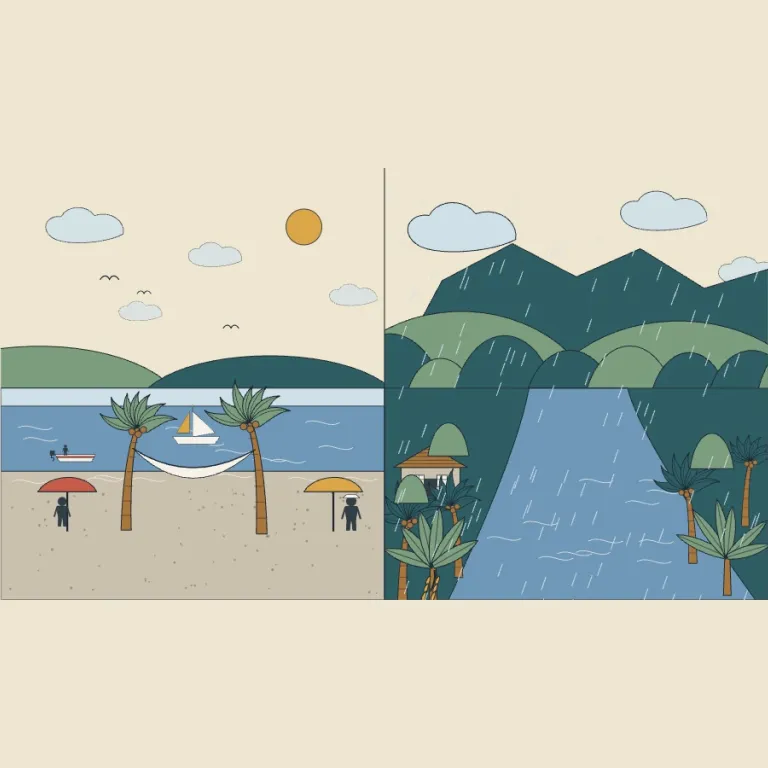
The best time to visit the Dominican Republic is December to April, when Punta Cana runs 79 to 81 °F (26 to 27 °C) on 11 to 14 rainy days a month and the sea holds 80 °F (27 °C). The best value sits in late April to early June. Avoid September and October: they are the peak of the Atlantic hurricane season and the wettest months on the east coast, at 129 and 131 mm. The country logged 8,860,709 non-resident arrivals in 2025, and September was the emptiest month of the year at 490,273, half of December. Start planning on mydominicanstay.com.
The Dominican Republic at a glance
- Best overall: mid-December to mid-April, dry, breezy, sea at 80 to 82 °F (27 to 28 °C) off Punta Cana.
- Best value: late April, May and early June, before the hurricane season builds and after the winter crowd leaves.
- Worst window: mid-August to mid-October, the core of the hurricane season, per the NOAA National Hurricane Center.
- Hurricane season: June 1 to November 30, statistical peak September 10.
- Humpback whales in Samaná Bay: January 15 to March 31, set each year by the Ministry of Environment.
- Sargassum on the east coast: heaviest from spring into summer, lightest from December to March, on University of South Florida satellite counts.
- Busiest month: December, with 976,734 arrivals in 2025. Quietest: September, with 490,273.
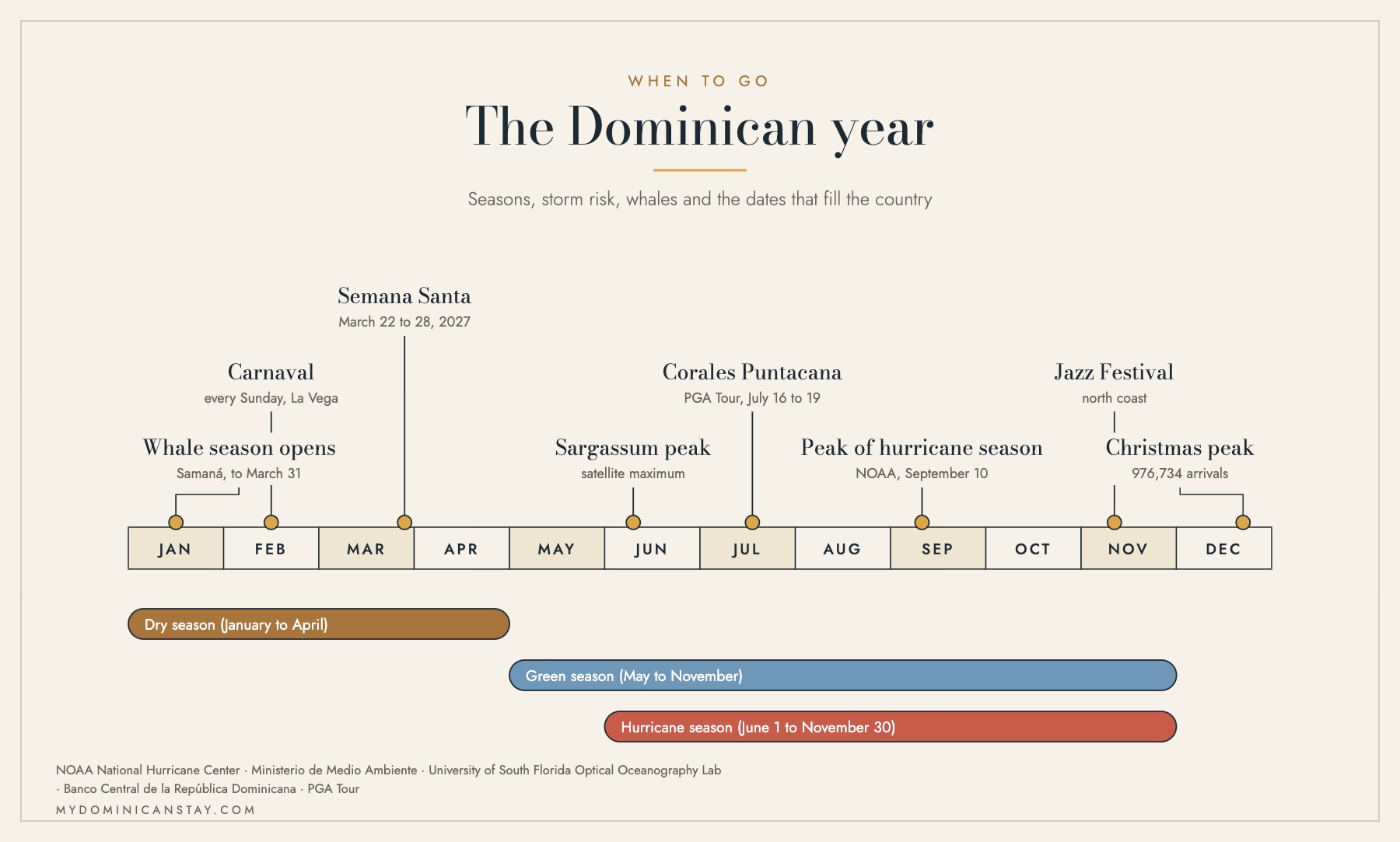
The Dominican year: seasons, storm risk, the whale window and the dates that fill the country.
Understanding the climate: one island, four different years
The Dominican Republic is not one climate. A mountain spine, the Cordillera Central, runs through the middle of the country and carries the highest summits in the Caribbean, and the weather you get depends on which side of it you book. The east coast, the south coast, the Samaná peninsula and the interior highlands each run a different calendar, which is why a single national answer to "when should I go" is usually wrong. The figures below come from the same 2001 to 2020 reanalysis for every location, so they can be compared directly.
Punta Cana and the east: dry winter, wet autumn
Punta Cana averages 79 °F (26 °C) in January and 85 °F (29 °C) in September, a swing of only six degrees across the whole year. Rain does the real work. February is the driest month at 36 mm over 10.9 days with 1 mm or more, while October is the wettest at 131 mm over 21.4 days. Nights never drop below 74 °F (24 °C), so this is the warmest and most humid corner of the country at 3 a.m. as well as at noon.
Puerto Plata and the north coast: the seasons are reversed
The north coast runs on the opposite calendar, because its rain comes from Atlantic trade winds hitting the Cordillera Septentrional rather than from summer convection. Puerto Plata is at its driest in June and July, with 46 and 43 mm, and at its wettest in November, with 102 mm over 16.6 days. That single fact reorders a lot of trips: June and July, which are shoulder months in Punta Cana, are the driest weeks of the year in Puerto Plata, Sosúa and Cabarete. Our comparison of Punta Cana and Puerto Plata works through what that means for a stay.
Santo Domingo: hotter days, cooler nights
The capital sits on the south coast and behaves like a city, not a beach. Daytime highs run 82 to 86 °F (28 to 30 °C), warmer than Punta Cana in every month, while nights fall to 69 °F (20 °C) in January and February, five degrees cooler than the east coast. Rain concentrates in May and August, at 113 and 144 mm, and the driest stretch is December to March, at 28 to 43 mm a month. Winter is when the Zona Colonial is most comfortable to walk, and our two-day Zona Colonial itinerary assumes exactly that.
The mountains: a different country entirely
Inland, altitude rewrites the numbers. At 1,171 metres, Constanza averages 73 to 79 °F (23 to 26 °C) by day and 60 to 66 °F (16 to 19 °C) at night, and January nights are the coldest in the country. Jarabacoa, at 537 metres, sits between the two worlds at 76 to 84 °F (24 to 29 °C) by day. Both are wetter than the coast: Constanza collects 1,489 mm a year against 1,028 mm in Punta Cana, with a sharp May maximum of 244 mm. Pack a layer for the evening, which is the one thing no Caribbean packing list tells you. A mountain stay in Jarabacoa is the clearest example of how far the country is from the all-inclusive cliché.
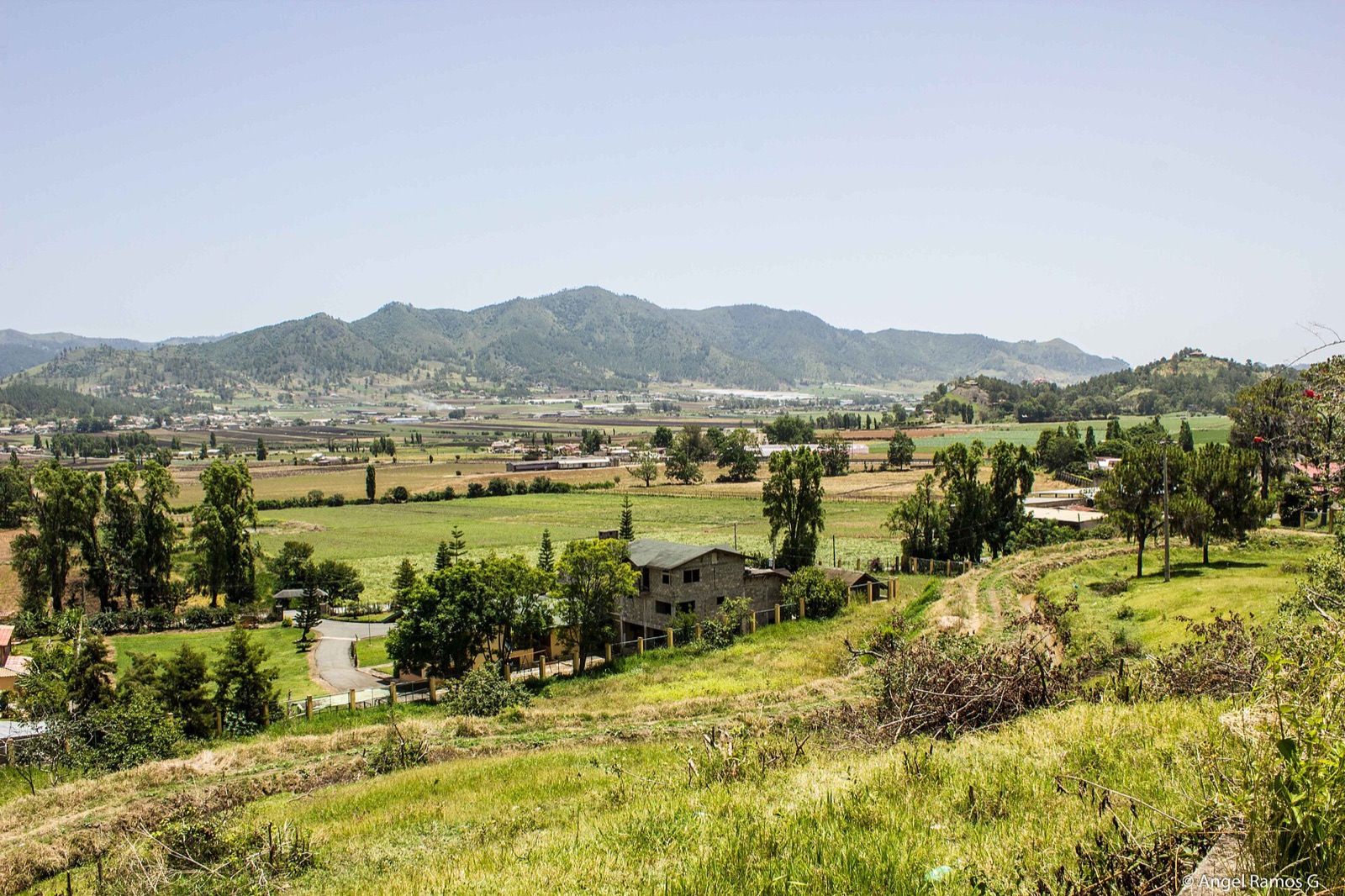
The Constanza valley, at 1,171 metres in the Cordillera Central, where nights drop to 60 °F (16 °C) in January. Photo : Angel Ramos G, Wikimedia Commons, CC BY 2.0.

The sea is warm all year
Sea surface temperatures off Punta Cana run from 80 °F (27 °C) in March to 85 °F (29 °C) in September and October, on NOAA satellite averages for 2016 to 2025. The north coast is within one degree of that, from 80 °F (27 °C) in March to 85 °F (29 °C) in October. There is no month when the water is too cold to swim. What changes is the surface: winter swell from North Atlantic storms reaches the north shore, which is what makes Cabarete a wind and wave destination rather than a flat-water one.
December to April: the dry season, and the one everybody books
This is the window the country is built around, and the numbers justify it. Punta Cana records 36 to 62 mm of rain a month from December through April, with 10.6 to 15.6 rainy days, against 131 mm in October. Days sit at 79 to 81 °F (26 to 27 °C), nights at 74 to 76 °F (24 °C), and the trade wind keeps the humidity manageable. It is also the only stretch of the year with no tropical cyclone risk at all.
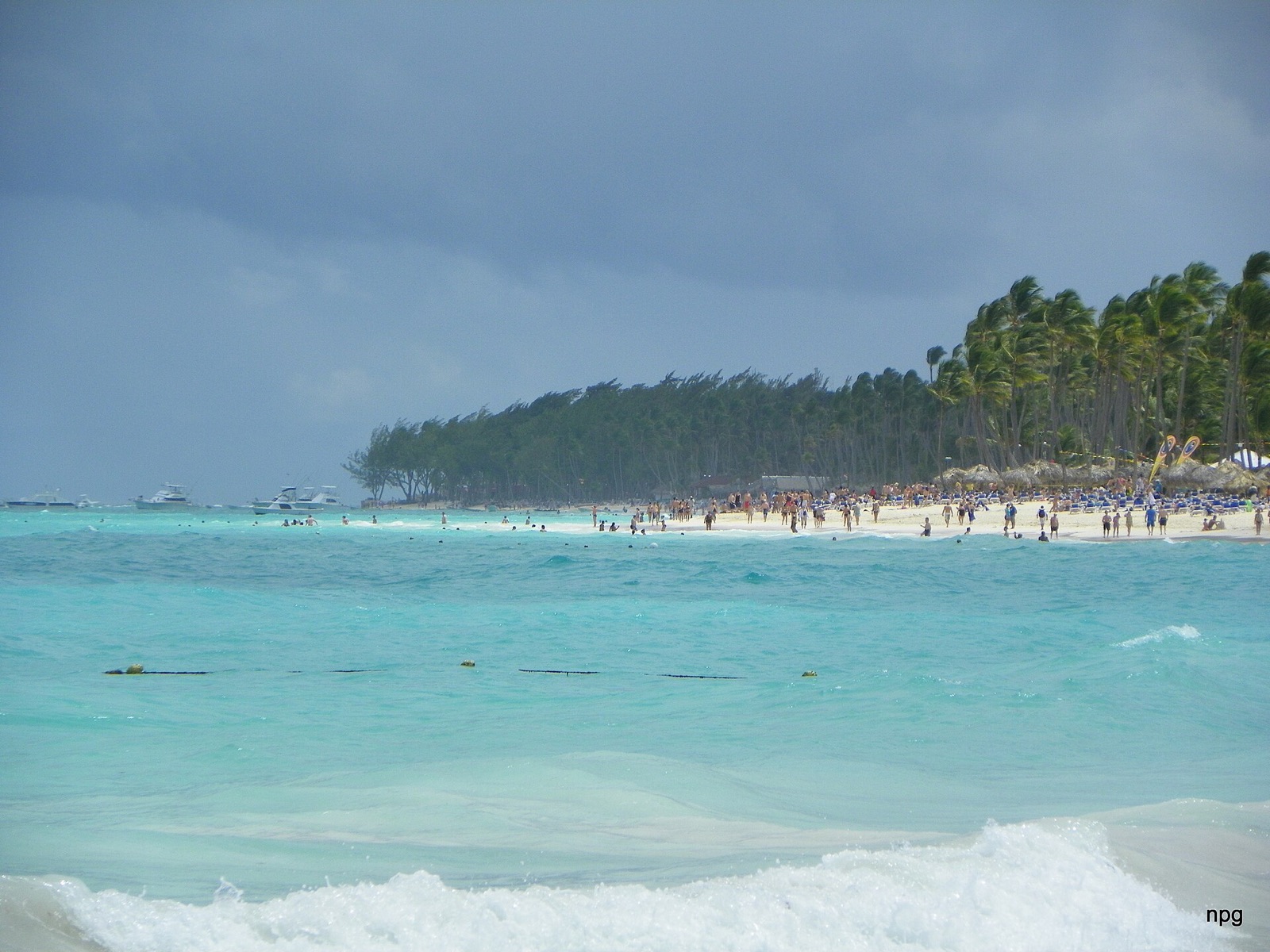
Playa Bávaro, Punta Cana, on the east coast, where the calmest, clearest water falls between December and April. Photo : Nelson Pérez, Wikimedia Commons, CC BY-SA 3.0.

The season is not uniform, and the three blocks inside it behave very differently.
- Mid-December to early January is the most crowded and most expensive fortnight of the year. December 2025 brought 976,734 non-resident arrivals, 11.0 percent of the entire year in a single month, according to the Banco Central de la República Dominicana.
- Mid-January to mid-March is the sweet spot: driest air, whales in Samaná Bay from January 15, and arrivals of 740,650 in February, a fifth below December.
- Late March and April hold the weather and add Semana Santa, which in 2027 falls on March 22 to 28. Dominican families head to the coast that week, beaches fill and the road out of Santo Domingo is slow on the Wednesday.
Two practical points. First, winter is the season of north swell: the Atlantic sends waves to the north coast between December and March, which is why Playa Grande and Encuentro surf best then, while the east coast stays calm. Second, the dry season is when the mountains are at their best, because Constanza and Jarabacoa are at their driest from December to February, at 47 to 71 mm a month, and the trails to Pico Duarte are least likely to be washed out.
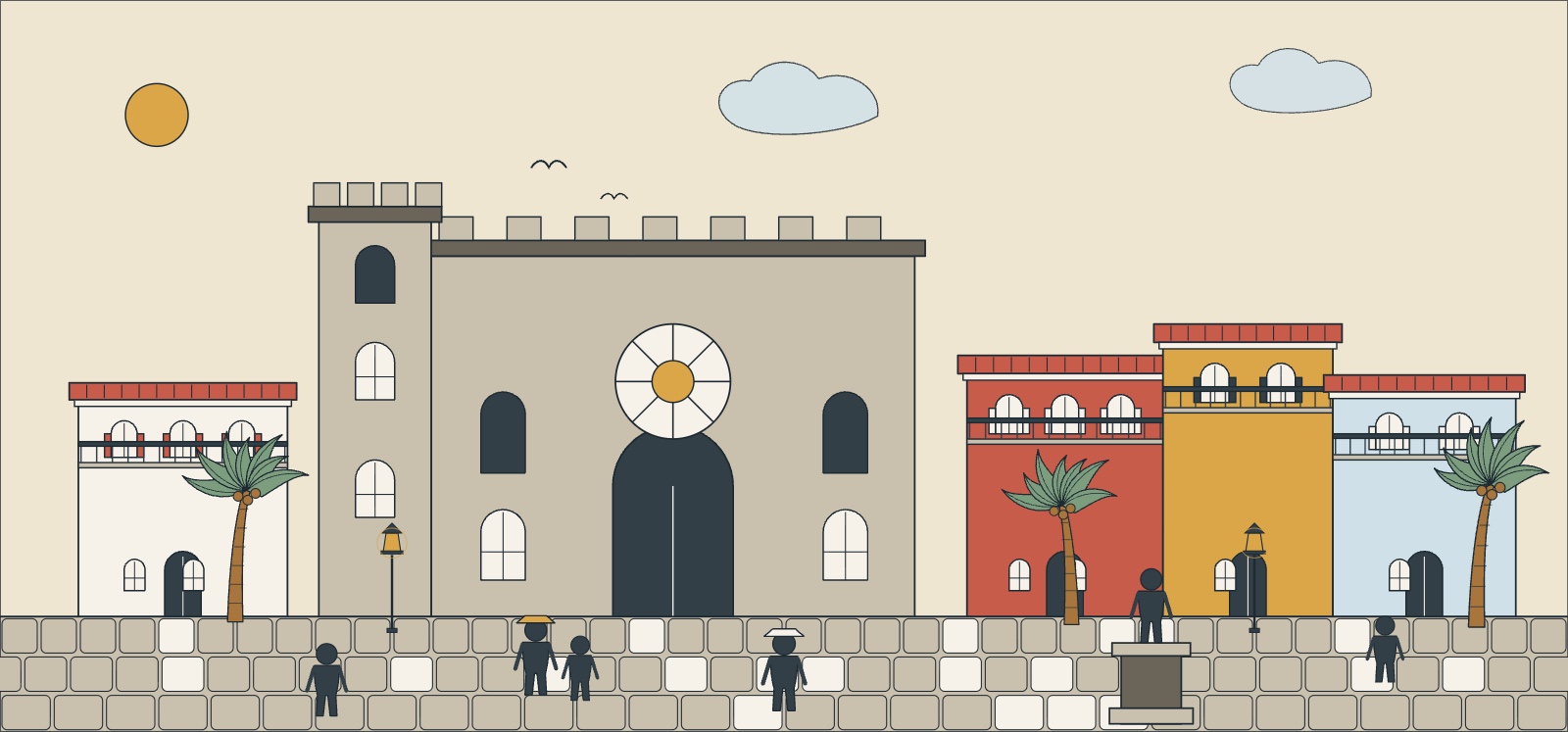
The Zona Colonial in Santo Domingo, at its most walkable in the dry months, and the finish line of the national carnival parade in early March. Illustration : Luxury & Premium Hotel Booking in Dominican Republic.
May to November: the green season, and why summer is not the empty season
The green season is wetter, hotter and cheaper, but it is not the deserted season the phrase suggests. Rain in Punta Cana climbs to 109 mm in May, eases to 78 mm in June, then builds again from July. Highs reach 84 to 85 °F (29 °C) with nights at 79 °F (26 °C), and the sea peaks at 85 °F (29 °C) in September and October. Rain usually comes as a heavy afternoon or overnight shower rather than a lost day, which is why the rainy season can still work for a refined stay.
The arrivals data breaks the usual cliché. July 2025 was the second busiest month of the year, with 863,780 arrivals, behind December only, because the Dominican diaspora and European summer holidays land together. The genuinely quiet months are September, at 490,273, and October, at 592,997: between them they account for 12.2 percent of the year, when December alone accounts for 11.0 percent.

The 27 waterfalls of Damajagua, near Puerto Plata: the rivers run full in the green season, from May to November. Illustration : Luxury & Premium Hotel Booking in Dominican Republic.
What the green season buys you:
- Space in September and October, when hotel demand is at its annual floor. Our September booking window piece covers the trade-off.
- The driest weeks on the north coast, since Puerto Plata's minimum is 43 mm in July. That is the logic behind June in Puerto Plata.
- The warmest water of the year, at 84 to 85 °F (29 °C) from July to November.
- Green landscapes inland, where the waterfalls at Damajagua and El Limón run full rather than thin.
What it costs you: humidity that does not break at night, afternoons you cannot plan around, and from June onward, storm risk. May and June are the compromise most travelers should look at first.
Hurricane season: June 1 to November 30
The Atlantic hurricane season runs June 1 to November 30, and the NOAA National Hurricane Center puts the statistical peak at September 10, with most activity between mid-August and mid-October. On the 1991 to 2020 record, an average Atlantic season produces 14 named storms, 7 hurricanes and 3 major hurricanes. The first named storm typically forms in mid to late June, the first hurricane in early to mid-August.
The Dominican Republic sits in the middle of that corridor, and the tourism figures show travelers already price the risk in: September arrivals are half the December figure. If you go anyway, the precautions are simple and worth taking.
- Book September and October with a rate that can be changed, and read the cancellation terms before the deposit, not after.
- Follow the National Hurricane Center advisories and the Dominican Centro de Operaciones de Emergencias alerts once you are within five days of travel. Storms are tracked days ahead, so a hurricane is rarely a surprise.
- Leave a buffer day before any connecting flight home in September, when a single closed airport reorders a week of schedules.
- Take travel insurance that names named-storm disruption, and keep the policy number offline.
- Expect the calm days in between to be genuinely calm: storm risk is a probability across the month, not a forecast for your week.
Sargassum: what actually lands on the east coast
Sargassum, the brown seaweed that drifts west across the Atlantic, is now part of planning a beach holiday on the east and south coasts. The University of South Florida Optical Oceanography Lab counts it by satellite every month, and its figures show the shape of the year clearly: the Caribbean held 0.45 million tons in December 2025 and 1.7 million tons in January 2026, then climbed to record levels through spring and early summer, with June 2026 at a record high for that month. Amounts began falling in July and, per the lab's August 31, 2026 bulletin, will keep decreasing into November, with beaching events continuing but less severe than in summer.
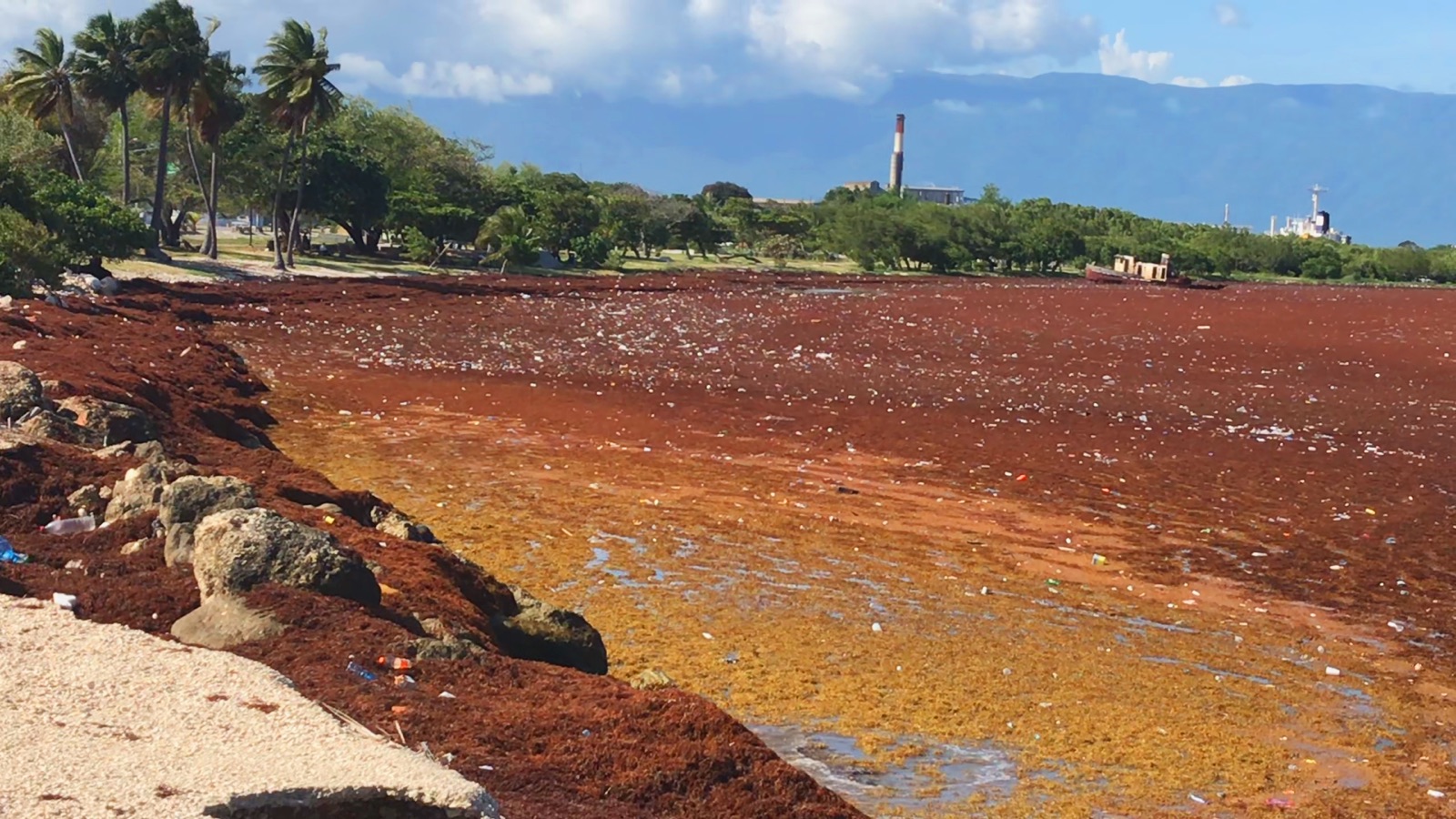
Sargassum stranded on a Dominican shore. Satellite counts put the Caribbean minimum in December and the maximum in early summer. Photo : JonasGuevara, Wikimedia Commons, CC BY-SA 4.0.

Three things follow from that, and none of them are in most seasonal guides.
- The clear window is December to March, exactly when the weather is at its best. The seaweed minimum and the dry season overlap.
- Position matters more than the month. Bávaro and the east-facing beaches catch the drift first; sheltered bays and the north coast are far less exposed, and hotels with a west or north-facing beach see less of it.
- A bad sargassum week is not a bad trip. The excursions inland, the reef trips out of Bayahibe and the pools are unaffected, and larger properties clear their beach every morning in peak season.
The Dominican Republic month by month
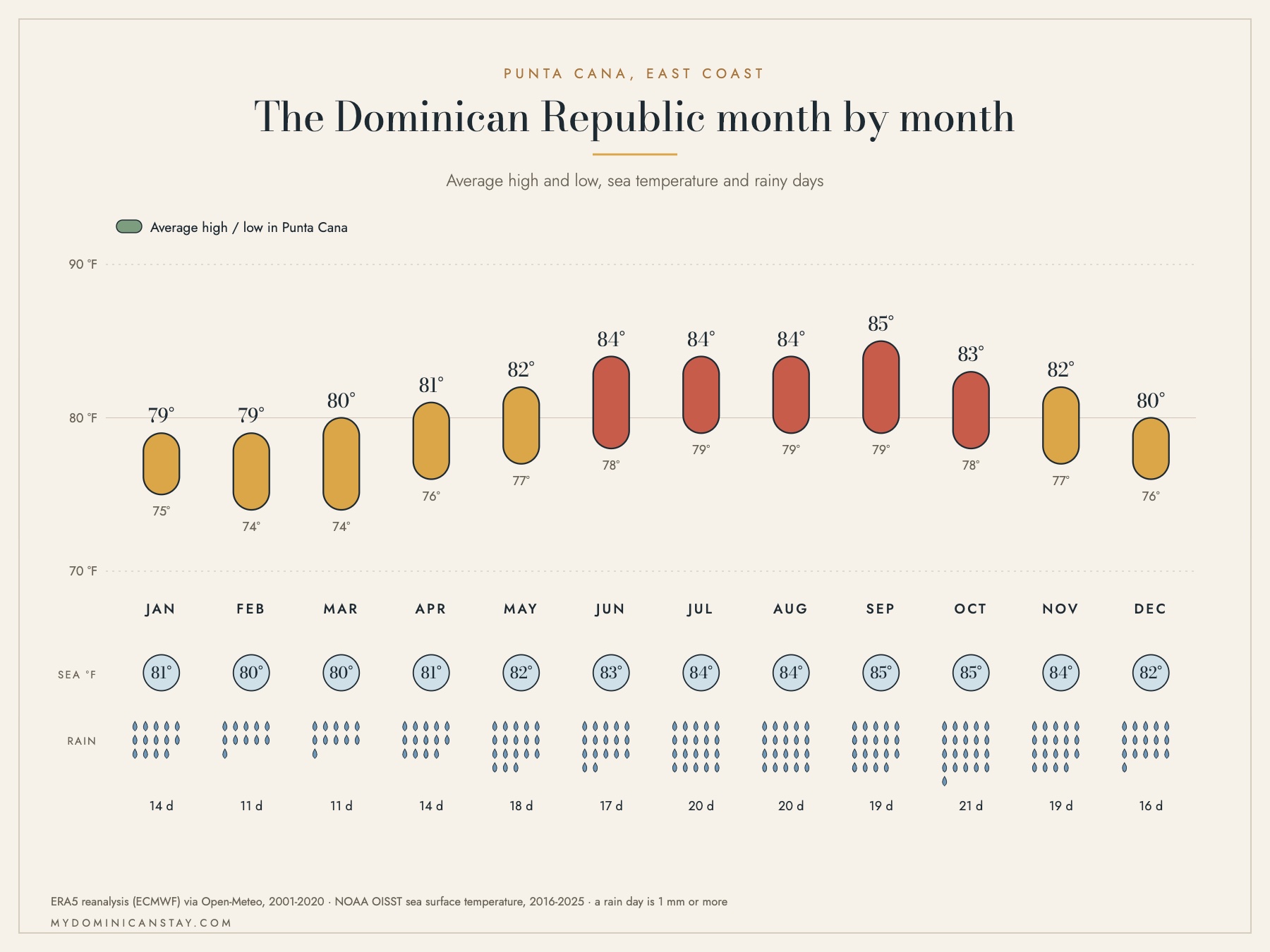
Punta Cana month by month: air and sea temperature, and rainy days.
Temperatures and rain below are for Punta Cana, the entry point for seven visitors in ten. The arrivals column is the official national count of non-resident air passengers for 2025, which is the closest thing there is to a crowd index.
| Month | High / low | Sea | Rain | Rain days | Arrivals 2025 | Verdict |
|---|---|---|---|---|---|---|
| January | 79 / 75 °F (26 / 24 °C) | 81 °F (27 °C) | 44 mm | 13.5 | 759,929 | Dry, busy, whales |
| February | 79 / 74 °F (26 / 24 °C) | 80 °F (27 °C) | 36 mm | 10.9 | 740,650 | Driest month, carnival |
| March | 80 / 74 °F (27 / 24 °C) | 80 °F (27 °C) | 40 mm | 10.6 | 819,976 | Dry, whales, excellent |
| April | 81 / 76 °F (27 / 24 °C) | 81 °F (27 °C) | 60 mm | 14.3 | 749,211 | Warm, dry, Easter |
| May | 82 / 77 °F (28 / 25 °C) | 82 °F (28 °C) | 109 mm | 18.4 | 673,705 | Showers, value, green |
| June | 84 / 78 °F (29 / 26 °C) | 83 °F (28 °C) | 78 mm | 16.8 | 770,403 | North coast driest |
| July | 84 / 79 °F (29 / 26 °C) | 84 °F (29 °C) | 102 mm | 19.8 | 863,780 | Hot, humid, full |
| August | 84 / 79 °F (29 / 26 °C) | 84 °F (29 °C) | 122 mm | 20.1 | 707,146 | Hot, stormy, watchful |
| September | 85 / 79 °F (29 / 26 °C) | 85 °F (29 °C) | 129 mm | 18.6 | 490,273 | Emptiest, riskiest, cheapest |
| October | 83 / 78 °F (29 / 26 °C) | 85 °F (29 °C) | 131 mm | 21.4 | 592,997 | Wettest, quiet, warm |
| November | 82 / 77 °F (28 / 25 °C) | 84 °F (29 °C) | 115 mm | 18.8 | 715,905 | Improving, quiet, jazz |
| December | 80 / 76 °F (27 / 24 °C) | 82 °F (28 °C) | 62 mm | 15.6 | 976,734 | Dry, festive, packed |
Air temperature and rainfall: ERA5 reanalysis (ECMWF) via Open-Meteo, monthly means 2001 to 2020, Punta Cana; a rain day is a day with 1 mm or more. Sea temperature: NOAA OISST, 2016 to 2025 averages, off Punta Cana. Arrivals: Banco Central de la República Dominicana, monthly tourist flow reports, non-resident air passengers, 2025.
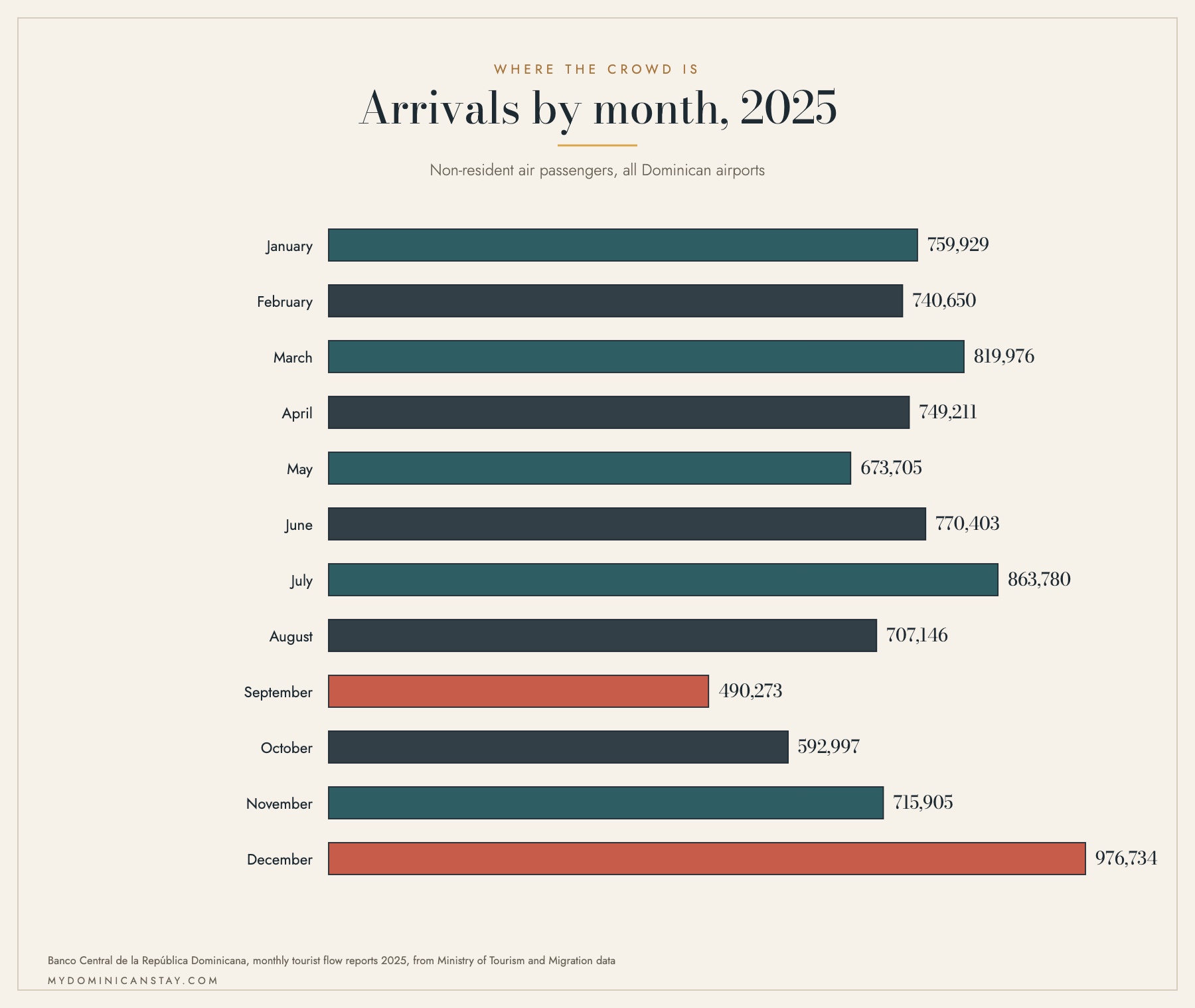
Non-resident air arrivals by month, 2025: December peaks at 976,734, September falls to 490,273.
The best time for what you want to do
Humpback whales in Samaná: January 15 to March 31
The whale season is fixed by the Ministry of Environment, and for the last several seasons it has run January 15 to March 31 in Samaná Bay. The ministry has identified 252 individual humpbacks in the bay, and recorded 61,558 visitors on whale trips in the first quarter of 2024, of whom 40,667 were foreign. For the 2026 season it issued 46 environmental authorizations to operators, so this is a regulated activity with a boat limit, not an open water free-for-all. Boats leave from Santa Bárbara de Samaná; February is the fullest fortnight of the season.
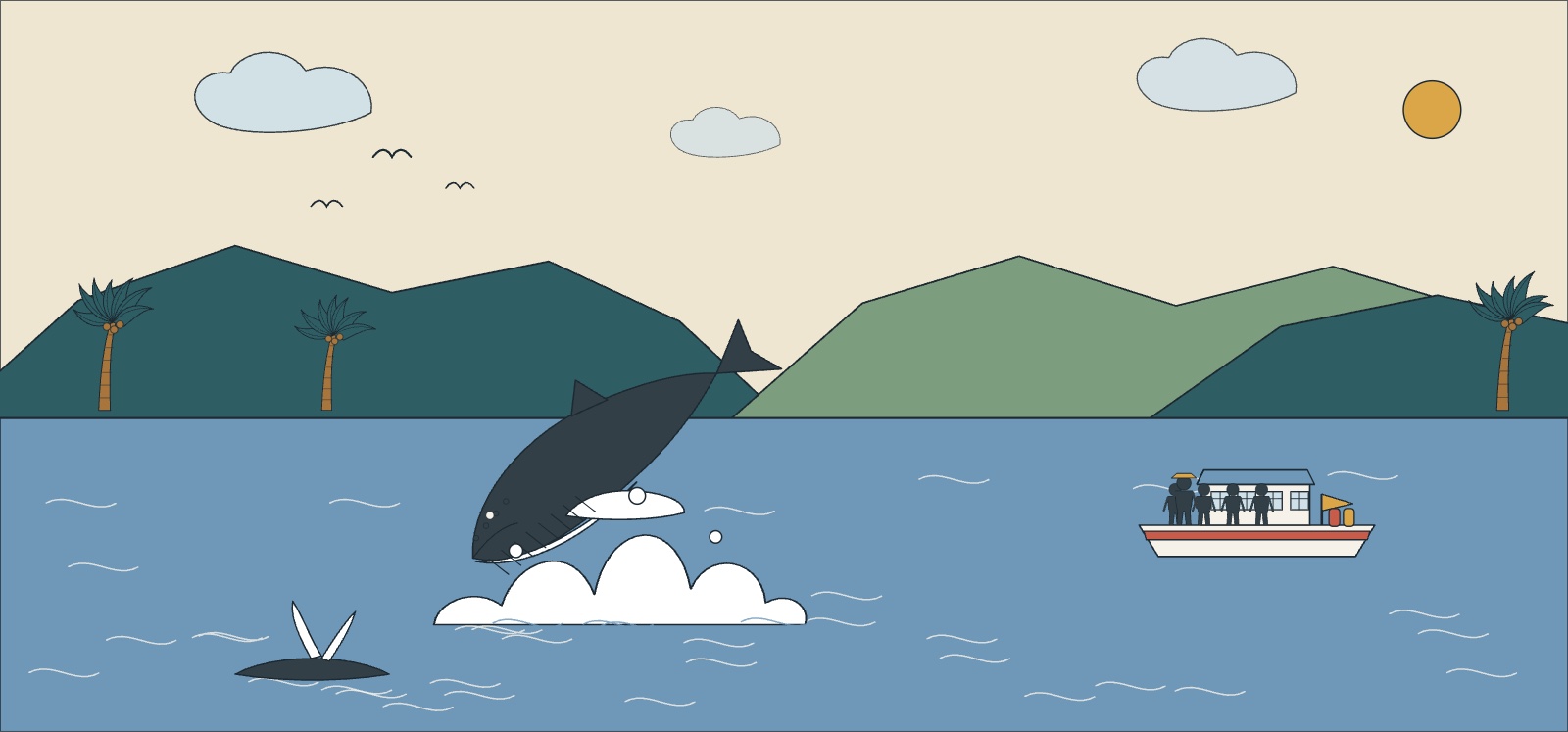
Humpback whales in Samaná Bay: the season set by the Ministry of Environment runs January 15 to March 31. Illustration : Luxury & Premium Hotel Booking in Dominican Republic.
Beach days and calm water: December to April
East coast beaches are at their calmest and clearest when the trade wind is steady and the swell stays north. Bávaro, Cap Cana, Bayahibe and the boat trips to Saona and Catalina all work best from December to April, which is also the sargassum minimum.
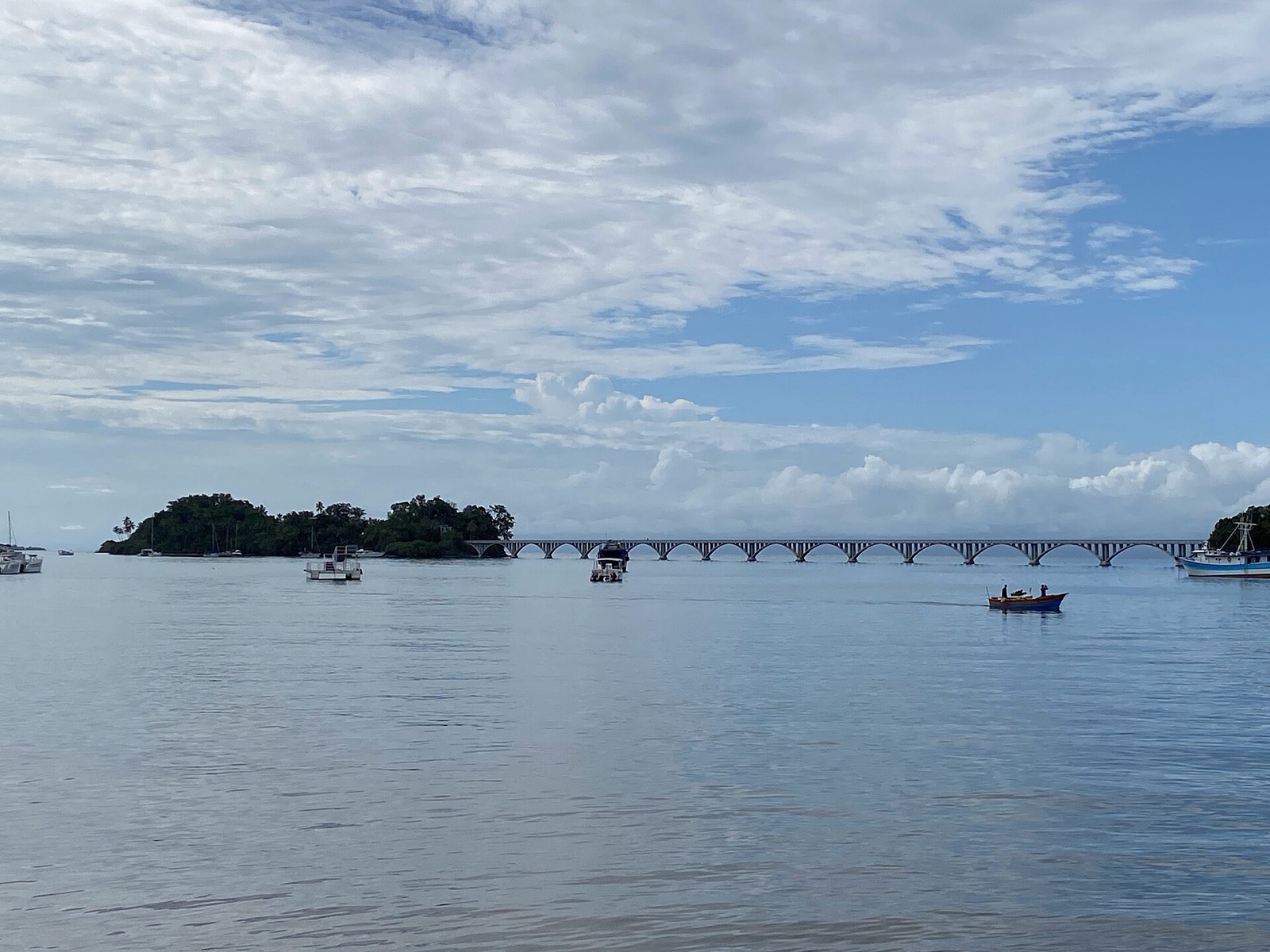
Samaná Bay, seen from Santa Bárbara de Samaná: the humpback season runs January 15 to March 31. Photo : -wuppertaler, Wikimedia Commons, CC BY 4.0.

Wind and waves on the north coast: two separate windows
Cabarete has two seasons, not one. December to March brings North Atlantic swell to Playa Encuentro and Playa Grande, which is the surf window. The summer months bring the steadier thermal wind that made Kite Beach famous. The 21st Master of the Ocean, which combines surfing, SUP, kitesurfing, windsurfing and wing foiling, ran at Playa Encuentro from September 16 to 20, 2026.
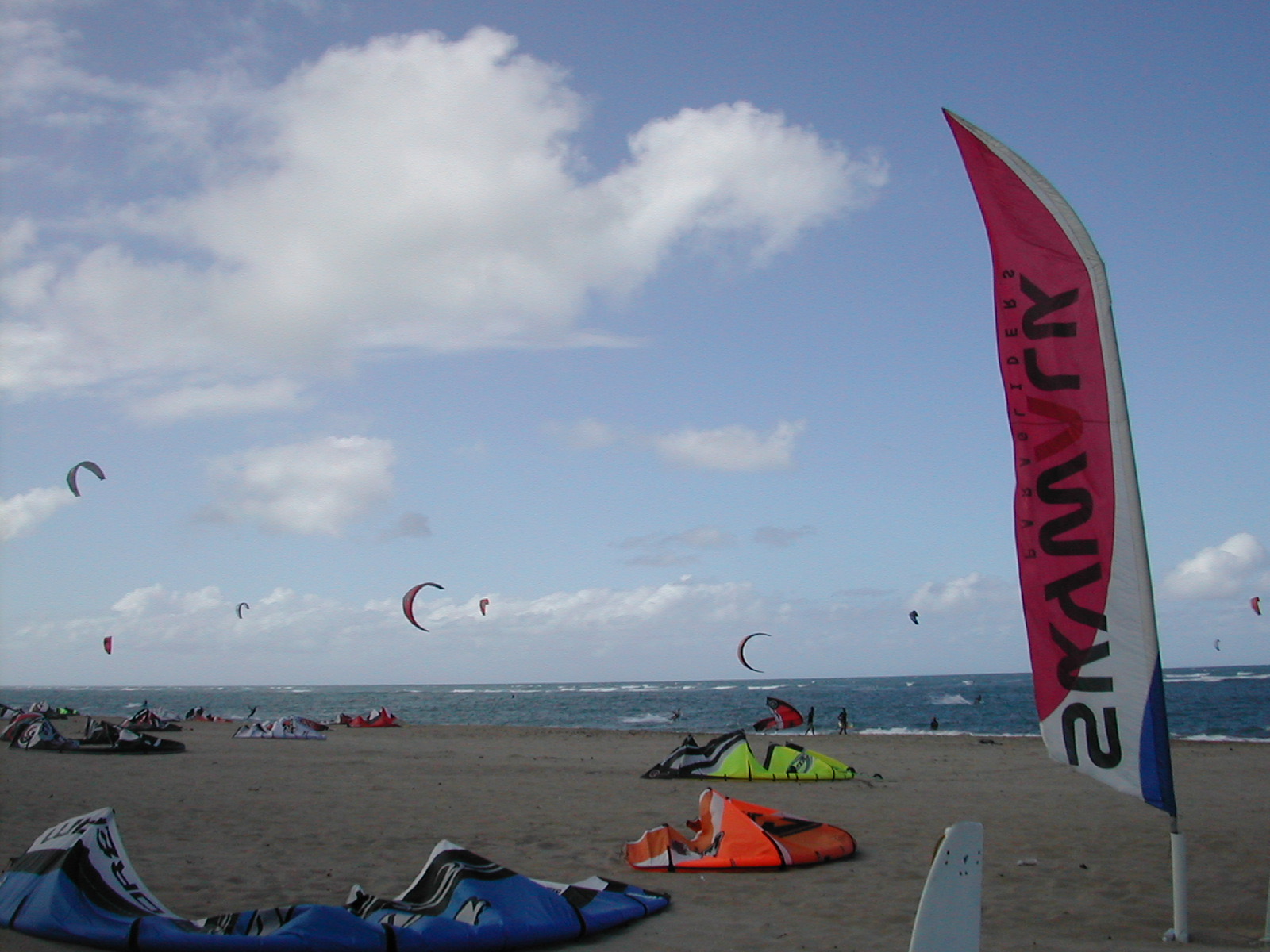
Kite Beach, Cabarete, on the north coast, where the summer trade wind season and the winter swell are two separate calendars. Photo : aroom, Wikimedia Commons, CC BY-SA 2.5.

Mountains and hiking: December to March
The Cordillera Central is a dry-season destination. Constanza records 47 to 54 mm of rain in January and February against 244 mm in May, and nights fall to 60 °F (16 °C), which is the coolest air in the country. Jarabacoa's rivers, the Jimenoa falls and the Pico Duarte routes are all easier before the May rains.
Golf: any month, but the tournament moved
Golf plays all year in Punta Cana and La Romana. The PGA Tour's Corales Puntacana Championship is now a summer event: the 2026 edition ran July 16 to 19 at Corales Golf Club, not in the spring slot it held for years. If you are building a trip around it, see our guide to Dominican golf.
Value: September and October
Demand is at its annual floor in September and October, at 490,273 and 592,997 arrivals against 976,734 in December. That is the discount window, and it is the same window as the hurricane peak. Our week-by-week booking guide sets out the alternative: the pre-summer weeks, which trade a smaller discount for far less risk.
Families: late June to August, or the winter holidays
Summer suits families who need school holidays, and July is the country's second busiest month for a reason. Water is at 84 °F (29 °C), the afternoon shower is predictable enough to plan around, and the family upgrades worth booking are released for those weeks.
Events that shape the year
- February, every Sunday: Carnaval. La Vega and Santiago hold the largest street carnivals, with the diablo cojuelo masks at the centre of both.
- February 27: Independence Day. A national holiday, and the climax of the carnival season in Santo Domingo.
- Early March: Desfile Nacional de Carnaval. The national parade closes the season on the Santo Domingo malecón. The 2026 edition, on March 15, gathered about 180 floats and more than 9,000 participants, according to the Presidency.
- March 22 to 28, 2027: Semana Santa. The biggest domestic travel week of the year. Book coastal hotels and restaurants well ahead.
- July: Corales Puntacana Championship. PGA Tour golf in Punta Cana, July 16 to 19 in 2026.
- November: Dominican Republic Jazz Festival. The north coast festival, staged across Cabarete, Sosúa and Puerto Plata, and the cultural high point of the quiet season.
- Mid-December to January 6: Christmas and Three Kings. Family season, full hotels, and the most expensive rates of the year.
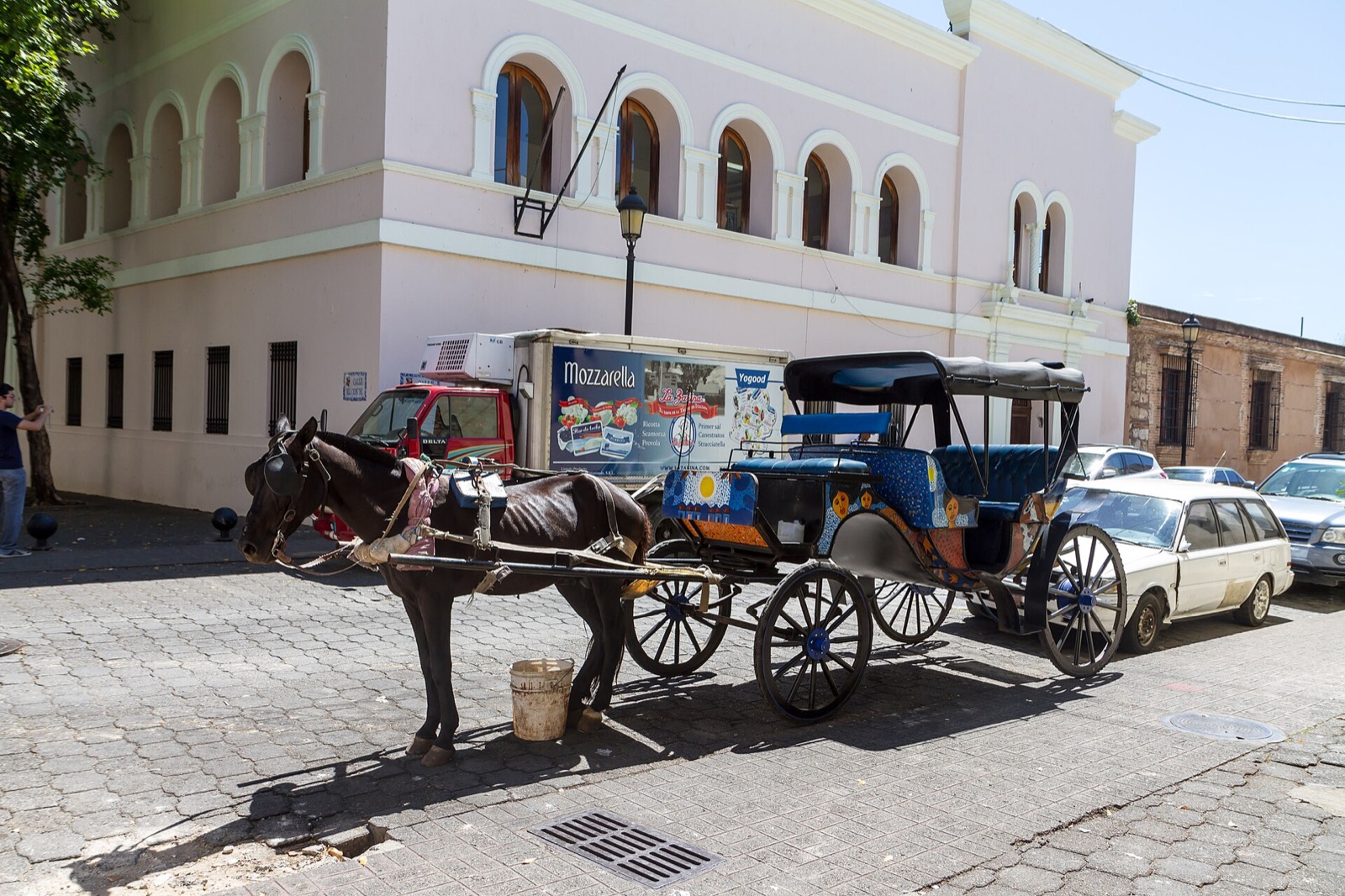
The Zona Colonial in Santo Domingo, easiest to walk from December to March, when nights fall to 69 °F (20 °C). Photo : Максим Улитин, Wikimedia Commons, CC BY 3.0.

Where to stay, season by season
The right base changes with the calendar more than in most Caribbean destinations, because the north and east coasts do not share a rainy season.
- Punta Cana beaches: the driest winter on the coast and the deepest choice of resorts, most exposed to sargassum from May to August.
- Samaná peninsula: the whale-season base from January 15 to March 31, and a green, low-density coast the rest of the year.
- Puerto Plata province: the one region whose driest months are June and July, which makes it the summer answer.
- Cabarete: wind, waves and a small hotel stock, best in the summer wind season and the winter swell.
- Colonial Zone, Santo Domingo: heritage hotels in walking distance of the cathedral, easiest from December to March when nights cool to 69 °F (20 °C).
- Hotel Gran Jimenoa, Jarabacoa: a riverside mountain base at 537 metres, for the dry-season months when the trails are open.
- La Romana beaches: the southeast alternative, with the Saona and Catalina boat trips on the doorstep.
FAQ
What month is the best to visit the Dominican Republic?
March is the strongest single month. Punta Cana averages 40 mm of rain over 10.6 days, highs of 80 °F (27 °C) and a sea at 80 °F (27 °C), the humpbacks are still in Samaná Bay until March 31, and sargassum is near its annual minimum. February is drier still, at 36 mm, but adds carnival crowds on weekends.
What months should you not go to the Dominican Republic?
September and October are the months to avoid. They sit inside the core of the Atlantic hurricane season, which the National Hurricane Center dates from mid-August to mid-October with a peak on September 10, and they are the wettest months in Punta Cana at 129 and 131 mm. Arrivals in 2025 confirm it: 490,273 in September against 976,734 in December.
What is the cheapest month to go to the Dominican Republic?
September is the cheapest month, followed by October. The country recorded 490,273 non-resident arrivals in September 2025 and 592,997 in October, the two lowest figures of the year, and hotel demand follows that curve. The trade-off is direct: those are also the two months with the highest tropical storm risk and the most rain.
What is the rainy season in the Dominican Republic?
It depends which coast. On the east and south coasts the wet season runs May to November, peaking in Punta Cana in October at 131 mm and in Santo Domingo in August at 144 mm. The north coast is the opposite: Puerto Plata is wettest in November at 102 mm and driest in June and July, at 46 and 43 mm.
When is hurricane season in the Dominican Republic?
The Atlantic hurricane season runs June 1 to November 30, and NOAA's National Hurricane Center puts the statistical peak at September 10, with most activity between mid-August and mid-October. An average season on the 1991 to 2020 record brings 14 named storms, 7 hurricanes and 3 major hurricanes across the whole Atlantic basin, not all of them anywhere near Hispaniola.
What are the worst months for seaweed in Punta Cana?
Spring and early summer are the worst. University of South Florida satellite counts put Caribbean sargassum at 0.45 million tons in December 2025 and 1.7 million tons in January 2026, rising to record levels by June 2026 before falling back from July. The cleanest beaches are therefore December to March, and west or north-facing shores catch less of it than Bávaro.
What is the best time to visit Samaná?
January 15 to March 31, when the humpback whale season is open in Samaná Bay. The Ministry of Environment sets those dates, has identified 252 whales in the bay and authorized 46 operators for the 2026 season. Outside the whale window, Samaná is at its driest in February, at 39 mm at Las Terrenas, and quietest in September and October.
What is the hottest month in Punta Cana?
September, with an average high of 85 °F (29 °C), a low of 79 °F (26 °C) and a sea at 85 °F (29 °C). July and August are within one degree. The figures look mild because they are averages of a maritime climate: what makes summer heavy in Punta Cana is humidity and nights that do not cool, not peak daytime temperature.